

Discover and better understand hydrolats
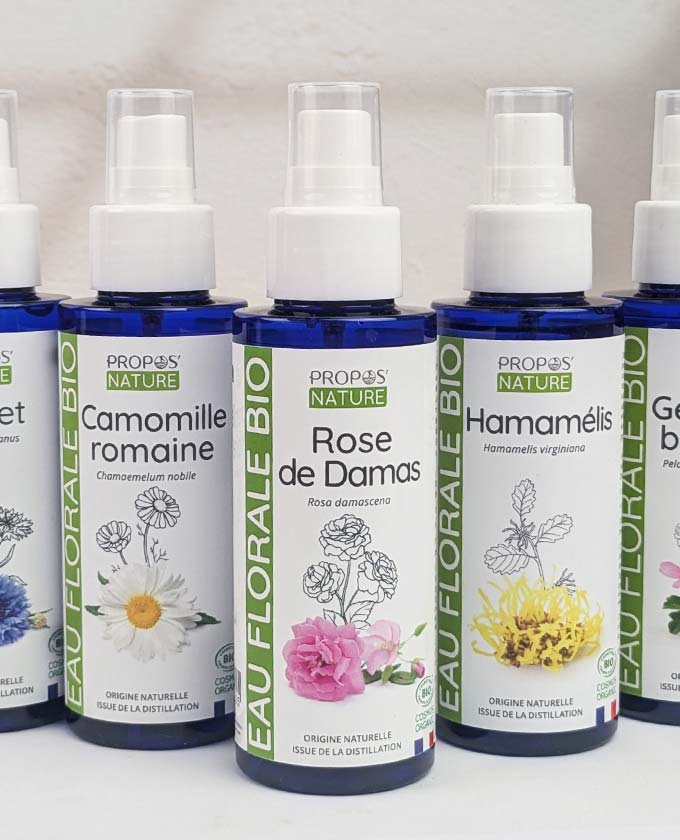
Hydrolats (commonly called Floral Water) are natural ingredients derived from plants that can be used in many ways: in cooking (Orange Blossom Water, Rose Water), to flavor a drink, on the skin, in diffusers…
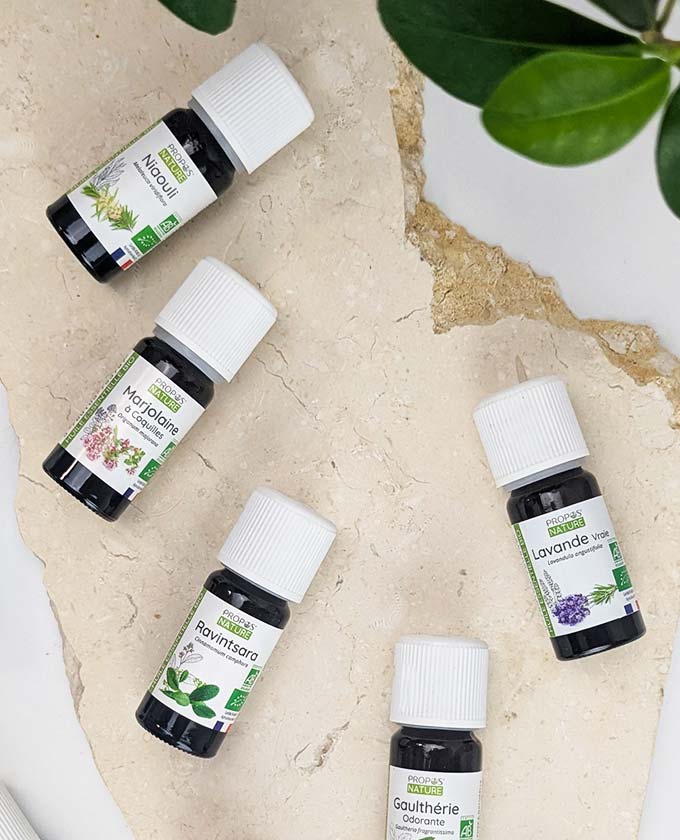
They are easier to use than essential oils and require fewer precautions because they are less concentrated in active molecules, while retaining similar properties.
- The essentials of hydrolats
- Extraction process by steam distillation
- Our quality criteria for hydrolats
The essentials of hydrolats
Hydrolats are aromatic waters, (commonly called Floral Waters), plant extracts obtained by steam distillation that contain essential oil molecules in "trace" amounts. They are the residue of distillation.
Each hydrolat has properties similar to the essential oil corresponding to the distilled plant, but its use is much broader, especially for children, due to its lower concentration of active molecules.
Extraction process by steam distillation
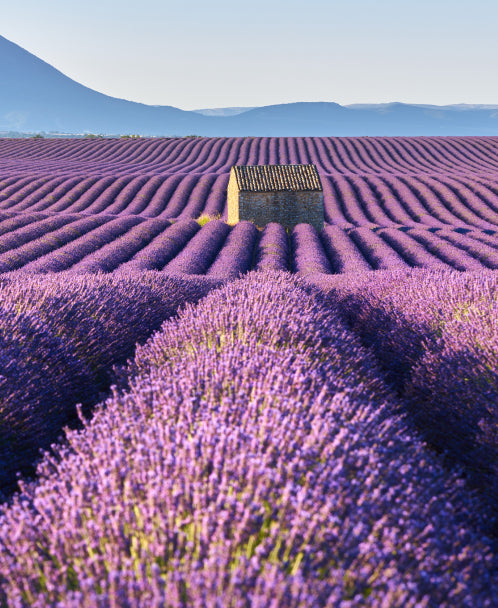
Steam distillation is the oldest method and the most suitable for extracting aromatic molecules. Fresh plants are distilled by steam entrainment to extract the essential oil and the hydrolat. For example, when True Lavender is distilled, the steam laden with essential oil condenses at the end of the process and turns back into water, the aromatic water or hydrolat.
Our quality criteria for hydrolats
Propos’Nature rigorously selects all its hydrolats. These are waters resulting from the distillation of aromatic plants from organic farming.
100% fresh, preserved, and without any chemical treatment, they can be used in aromatherapy and phytotherapy alone as a refreshing tonic lotion or in synergy for making "homemade" cosmetic recipes. It is, in a way, a "gentle" version of aromatherapy suitable for children, in particular.
Read more
Vegetable oils come from oilseed plants (from the Latin oleago: containing oil), unlike essential oils which are derived from aromatic plants. Vegetable oils are widely used in cosmetics, where the...
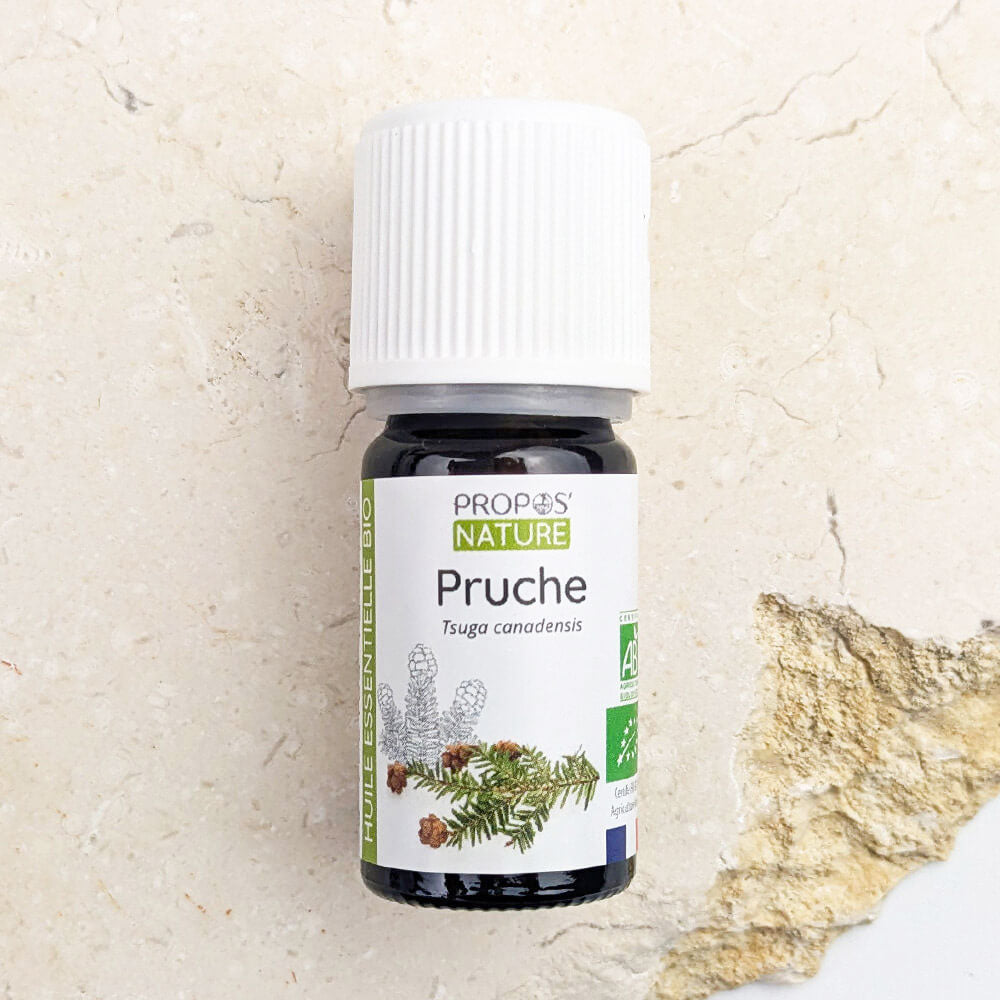
Hemlock essential oil is extracted from the branches and needles of Canadian Hemlock, also known as Eastern Hemlock or Tsuga canadensis. This tree, which grows only in the forests of North America,...


