


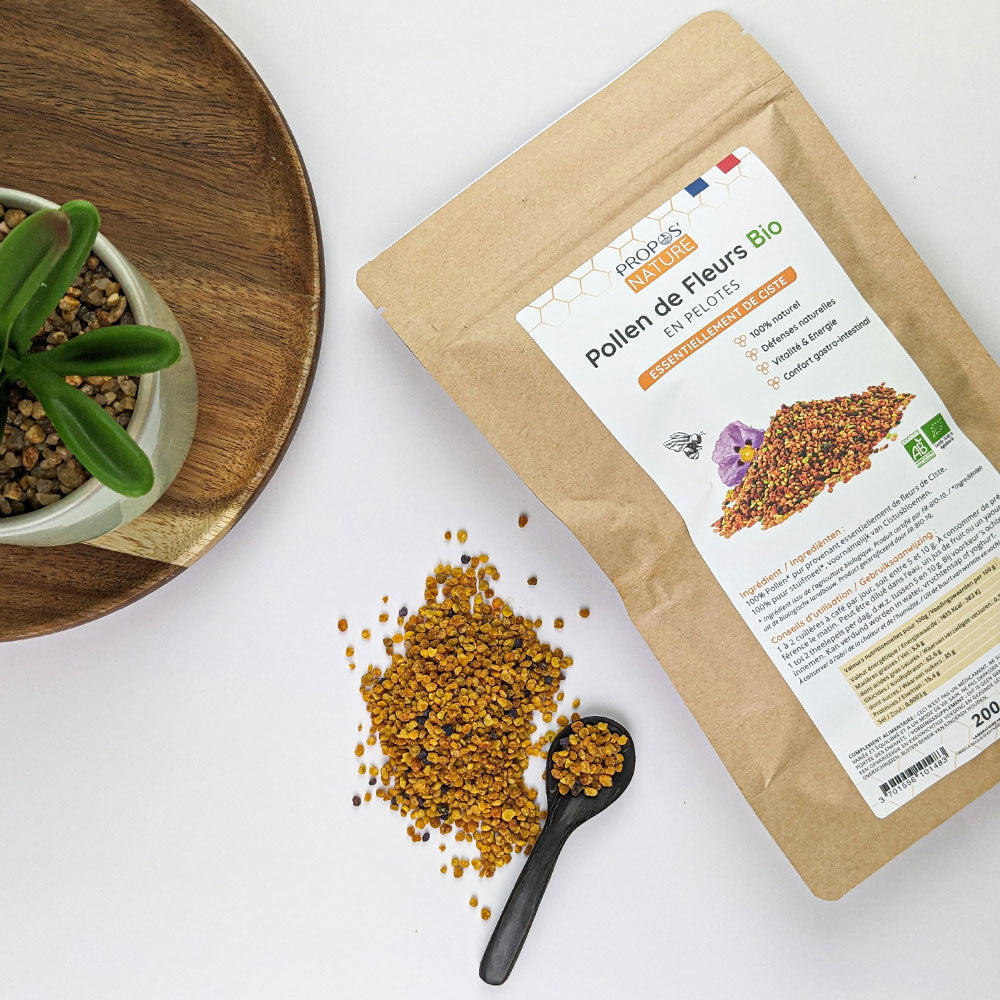
Pollen, a natural superfood for vitality and immunity
Pollen is a food rich in nutrients, and its composition varies greatly depending on the flowers from which it originates.
It can contain 20 to 30% protein depending on the variety, which is why it is often recommended for athletes and the elderly to help with muscle mass gain.
Its richness in fiber (12% on average) allows it to be used as a prebiotic. The presence of a small amount of glutamine (associated with 4 other co-factor amino acids present in pollen) gives it a positive action on the regeneration of the intestinal mucosa, helping to combat intestinal hyperpermeability.
Pollen also provides an intake of B vitamins, which are often insufficient in the diet. B vitamins, well-known for their beneficial action on hair, are also fundamental for nervous balance, digestive quality, inflammation management, and red blood cell production.
Pollen is also a good source of minerals and trace elements, which enable the remineralization of the body, an improvement in vitality, and support for the immune system.
The phytosterols (plant lipids) in pollen have a cardio-protective effect and help regulate cholesterol levels; they are also credited with positive effects on menopausal hot flashes (associated with flavonoids).
The antioxidants contained in pollen will help improve cell renewal and fight low-grade inflammation. Our pollen, mainly from Cistus flowers, contains a greater quantity of carotenoids and vitamin E, two major antioxidants for inflammatory pathologies, particularly intestinal ones.

|
Organic Cistus Pollen Cistus pollen has the advantage of a very pleasant taste that encourages long-term use. Directions for use: consume pure, in water, fruit juice, compote, or yogurt. Take 1 to 2 teaspoons per day for a 3-week course, to be repeated. |
Read more
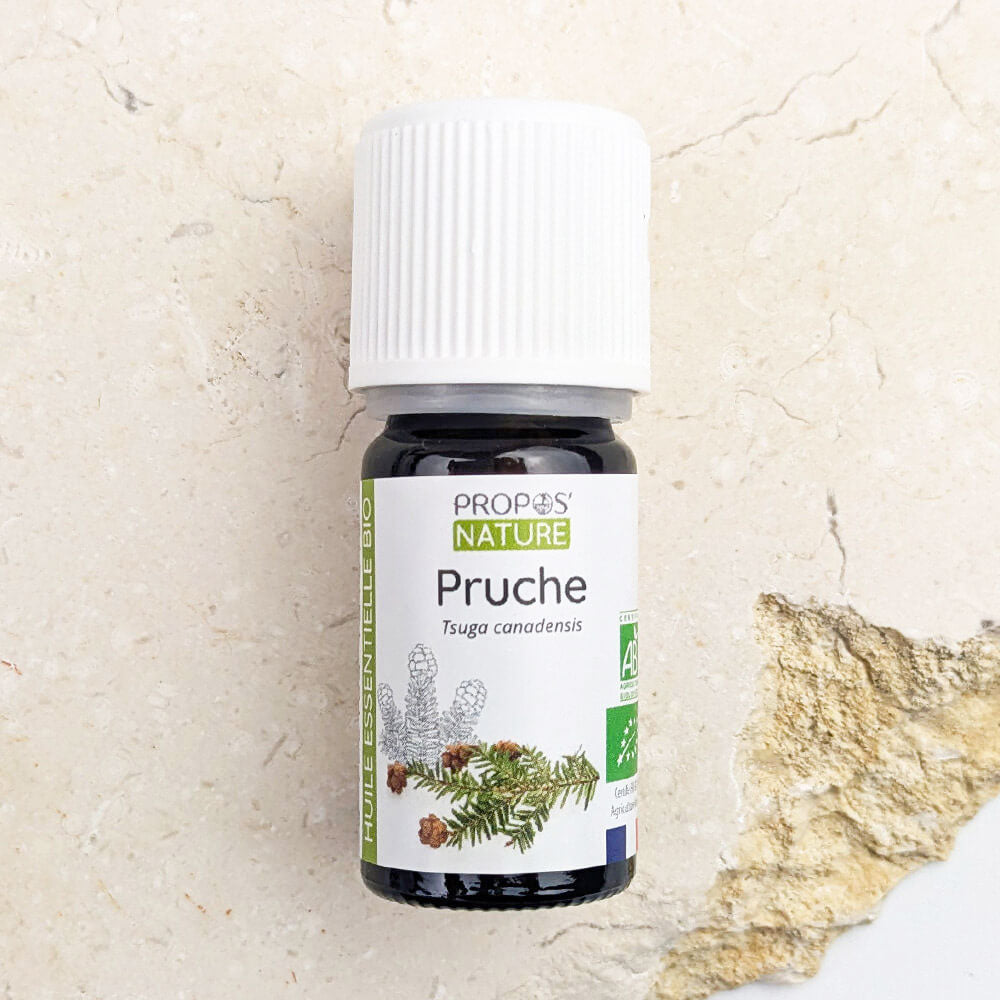
Hemlock essential oil is extracted from the branches and needles of Canadian Hemlock, also known as Eastern Hemlock or Tsuga canadensis. This tree, which grows only in the forests of North America,...
Which food supplements are truly necessary and effective for improving my athletic performance and preventing the risk of deficiencies linked to intense training sessions? This practical guide aims...


