



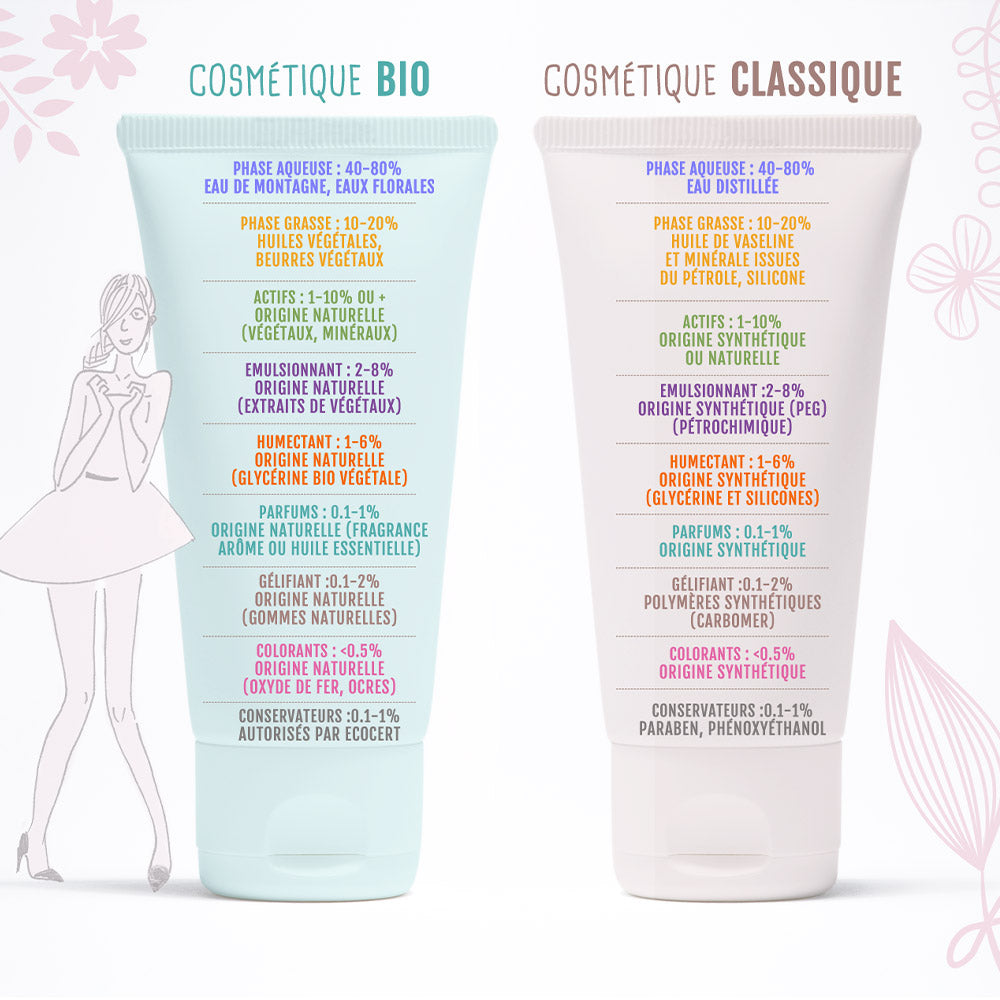
Organic Cosmetics vs. "Conventional" Cosmetics
What is the COSMEBIO charter?
A natural cosmetic bearing the Cosmébio logo is a guarantee of quality, avoiding the "marketing" pitfalls (e.g., "with natural active ingredients" where only the active ingredients are natural) of many uncertified organic brands unscrupulously trying to gain a foothold in this growing, ultra-competitive market.
Joli'Essence has chosen to offer only raw materials and finished products of natural origin and certified organic when possible, aware that today we need reassurance, security, and to know what we are buying for responsible consumption.
Established in 2002, COSMEBIO is an association of professionals committed to natural and organic cosmetics. It was in 2003 that this association submitted the specifications for Ecological and Organic Cosmetics to the Ministry of Industry and Trade.
These highly demanding specifications strictly and transparently define "Ecological and Organic Cosmetics." They go far beyond the presence of organic farming products in the formula: they also guarantee environmentally friendly production and manufacturing processes.
Products complying with the Cosmebio charter fully meet these specifications. They are then controlled and certified by independent and accredited organizations such as ECOCERT or BUREAU VERITAS. They are identifiable by the Organic label, which guarantees that:
- 95% minimum of total ingredients are of natural origin;
- 95% minimum of total plant ingredients come from Organic Farming;
- 10% minimum of total ingredients come from Organic Farming.
This last percentage may seem low, but it is explained by the presence of water in the formulas. This uncertifiable ingredient is generally found at 60% to 80% in certain cosmetic products (lotion, shower gel, etc.). These percentages are generally indicated on the back of the packaging, under the "INCI" list, which is the list of ingredients that make up the product.
Organic cosmetics vs. "conventional" cosmetics?
SAFETY ASPECT
So-called "classic or conventional" cosmetics contain components that are largely derived from synthesis and more precisely from the petrochemical industry. These non-natural components have no particular affinity with the skin (unlike plant ingredients), and may even be ineffective (but often used to improve texture, feel, and not for their benefits on the skin).
The long-term effects of synthetic ingredients on the body are still little or poorly known: comedogenic for some, preventing skin tissues from breathing by forming an occlusive film on the skin's surface, or potentially carcinogenic for others...
These poorly biodegradable ingredients, sometimes dangerous for the environment, and for which some companies have conducted animal tests, are no longer accepted by informed consumers concerned about their health and environment.
Ingredients in natural and certified organic products are used for their beneficial action on the skin but also for their harmlessness and safety.
When you buy an organic cosmetic product, it means that it is manufactured according to an eco-design principle that respects the environment at every step of the process:

COMPOSITION & EFFICIENCY ASPECT
A natural and organic finished product certified Cosmebio contains exclusively healthy and natural ingredients from controlled and environmentally friendly cultures:

|
Synthetic oils like paraffin or petroleum jelly are replaced in natural cosmetics by cold-pressed virgin vegetable oils, with excellent nourishing properties and water retention. |
 |
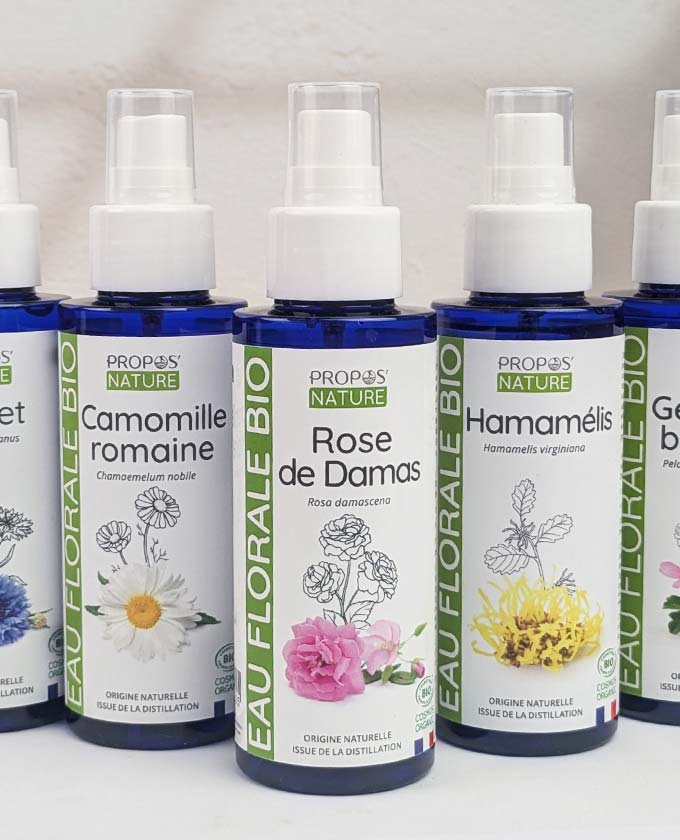
Distilled or osmosed water, without specific benefits, is replaced in products and recipes by floral waters (hydrolates) rich in active aromatic molecules or by mountain spring water, rich in trace elements and minerals. |
 |
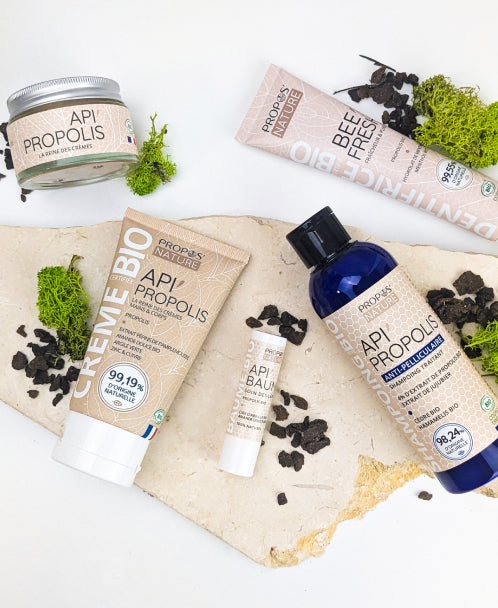
Synthetic active ingredients in conventional cosmetics are replaced in natural cosmetics by plant or mineral extracts selected for their high effectiveness and sourced from organic farming. These natural active ingredients are much better tolerated and assimilated by the skin and also by the environment. |
 |
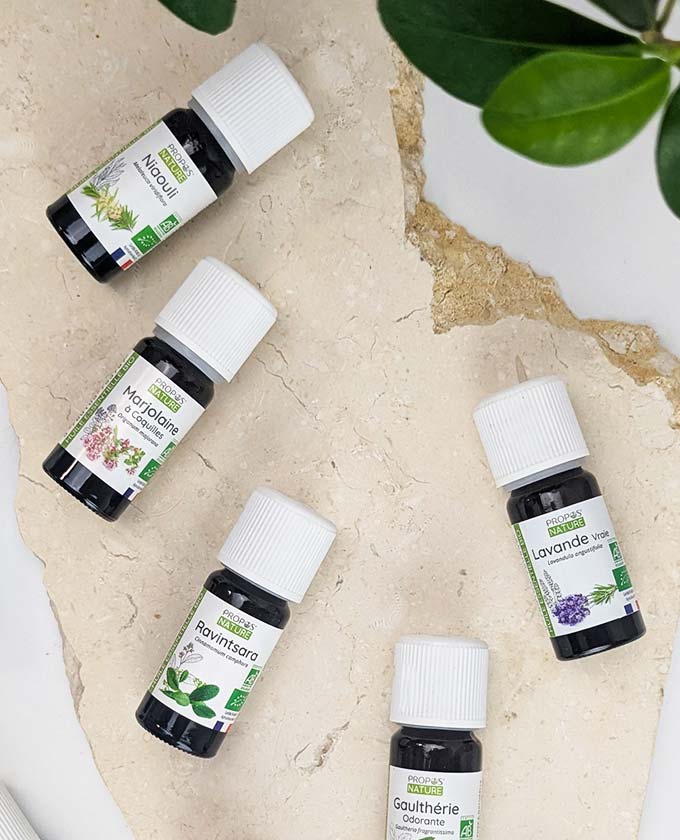
Synthetic perfumes in natural cosmetics become exclusively essential oils or natural perfumes (fragrances). |
 |
Preservatives meet drastic specifications and are either purely natural or synthetic but very gentle on the skin, and therefore recognized by certifying bodies as a responsible ingredient that can be included in the composition of an organic finished product. |
WE ATTACH GREAT IMPORTANCE TO ALL JOLI'ESSENCE PRODUCTS BEING TOTALLY HEALTHY NATURAL COSMETICS FOR THE SKIN, OFFERING RELIABILITY AND SAFETY OF USE IN TERMS OF CONTROLLED NATURAL COSMETICS.
COMMERCIAL ASPECT
Highly prized for their long shelf life (which wrongly makes them a guarantee of safety because a natural product is supposed to be "alive" and therefore potentially change over time), their varied scents and textures, conventional cosmetic products are attractive to consumers. Significant developments have been underway in organic cosmetics for several years now.
Joli’Essence offers effective products, with textures and scents just as pleasant as classic products. The preservation systems for organic products are more sophisticated than before, even if they don't remain unchanged for 3 years like conventional cosmetics.
The question to ask should rather be:
Is it normal for a cosmetic cream not to change for several years in your bathroom, without being kept refrigerated and with fingers dipped in it every day?
For natural foods we eat, fruits and vegetables for example, wouldn't we be shocked to be able to keep them for several months without them changing their appearance? Certainly yes.
The same applies to the products we put on our skin.
The variation to highlight is that some organic products do not necessarily act in the same way as a conventional product. Thus, an organic shower gel will not be as foamy as a classic shower gel simply because they do not contain the same surfactants. An organic product will contain a surfactant that is just as effective for cleaning the skin, much gentler and less irritating, but the downside is that it will be less foamy. The same goes for hair conditioners; synthetic silicones will give a silky smooth feel that certainly cannot be obtained with a natural active ingredient. But nature has not finished surprising us, and new natural active ingredients may well impress us even more in a few years! The advantage is that Nature is an infinite resource...
Read more
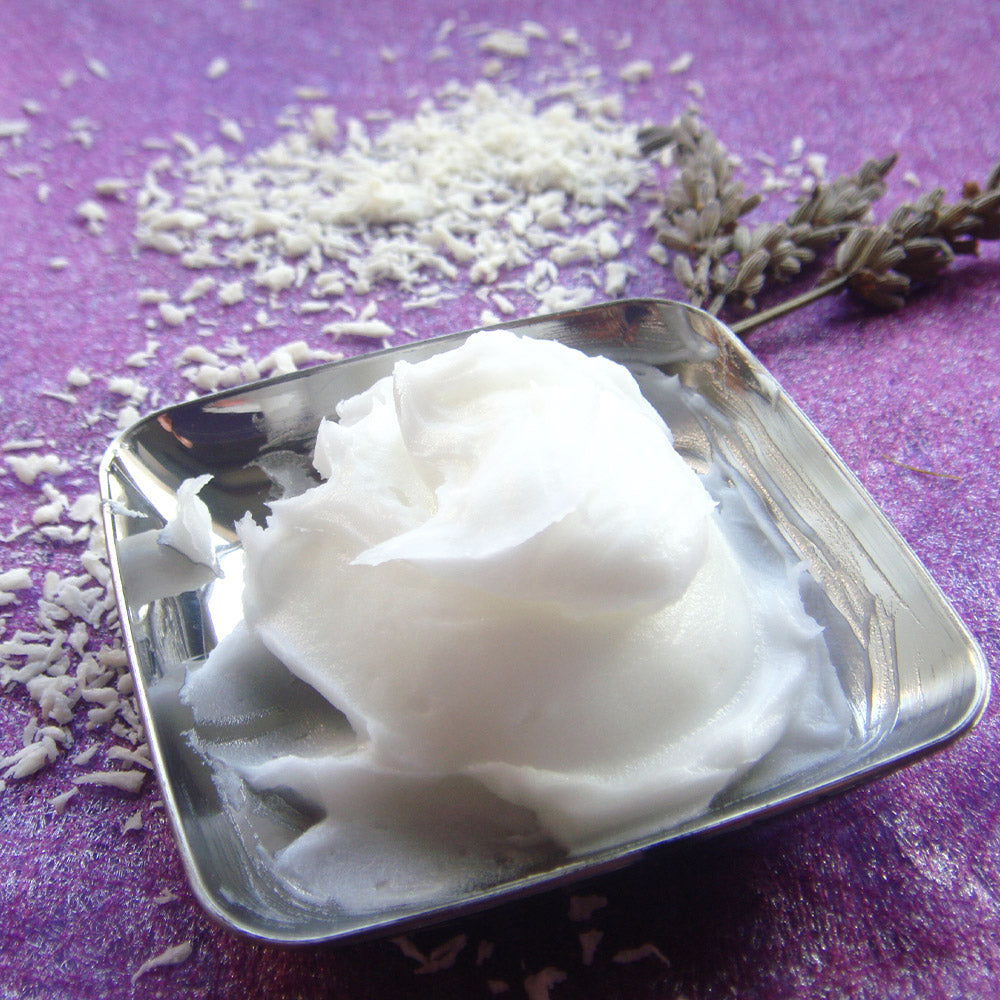
Trust the properties of Coconut Oil and Lavender to protect your little ones' hair from lice... This hair balm has saved many heads at the start of the school year! An ideal and natural anti-lice t...

Pimples, blackheads, shiny skin, scars… acne is a scourge that affects our skin. While teenagers are primarily concerned, adults can also suffer from it due to hormonal imbalances, an overly fatty ...


